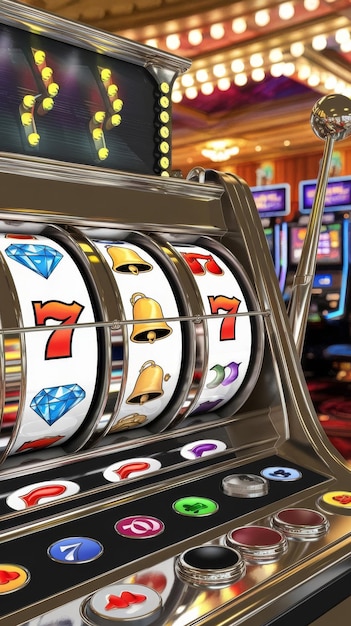
Bring Your Console Game to Arcade Life
Transform your console experience into an engaging arcade attraction that captivates players and generates consistent revenue
Back to HomeWhat This Conversion Delivers
Your console game already has the foundation of something special. What if it could reach players in arcade venues, entertainment centers, and gaming spaces around the world? This conversion service creates that bridge, taking what works on home systems and reshaping it for the unique environment of coin-operated play.
You'll see your game come alive on arcade cabinets with controls that feel natural from the first moment someone approaches. The pacing adjusts to fit arcade sessions while keeping the heart of your gameplay intact. Visual presentation gets optimized for the impressive displays arcade cabinets offer, making your game stand out in busy venues.
Beyond the technical transformation, you gain access to a market that values quality arcade experiences. Operators look for games that engage quickly, play smoothly, and keep players coming back. This conversion positions your game to meet those expectations while maintaining what made it work on consoles in the first place.
The Console-to-Arcade Challenge
Console games are designed for specific circumstances. Players sit comfortably with a familiar controller, often playing for extended sessions. They can pause whenever needed, save progress, and return later. The arcade environment works differently, and that difference matters more than many developers initially realize.
Your console game might have intricate control schemes that work beautifully with dual analog sticks and multiple shoulder buttons. How does that translate to a joystick and six buttons? The answer isn't always obvious, and getting it wrong affects everything. Players standing at an arcade cabinet expect immediate clarity about what each control does.
Then there's the question of session design. Console games often build toward longer play experiences with gradual progression systems. Arcade players might have five minutes or less. They need something that engages immediately, provides satisfying moments quickly, and leaves them wanting to come back. Reconciling these different expectations requires more than just technical porting.
Our Conversion Process
Control System Reconstruction
We start by mapping every action in your game to arcade inputs. This isn't just about making buttons do what controller buttons did. It's about understanding the hierarchy of actions and organizing them so they feel intuitive on different hardware. Secondary functions get combined intelligently. Complicated sequences become single actions where it makes sense. The goal is controls that new players understand within seconds while still giving experienced players the precision they need.
Session Architecture
Arcade gameplay has a particular rhythm we design around. Quick starts that get players into action immediately. Clear objectives that guide without overwhelming. Difficulty that challenges without frustrating, especially in those crucial first minutes. We adjust progression systems to work in shorter bursts while maintaining a sense of achievement. Score systems and high score tables provide motivation for repeated plays. The experience respects both the player's time and the operator's business model.
Visual Enhancement
Arcade displays offer opportunities console screens might not. We optimize your game's visuals for the specific characteristics of arcade monitors. Colors get adjusted for maximum impact in various lighting conditions. UI elements scale appropriately for viewing distances typical in arcade settings. Attract mode sequences show off your game's best moments, drawing players from across the venue. Every visual decision considers both technical capabilities and the competitive environment of an arcade floor.
Hardware Compatibility
Arcade operators use different cabinet configurations and system boards. Your converted game needs to run reliably across this variety. We test extensively on multiple hardware setups, ensuring consistent performance. Memory management gets optimized for the specific constraints of arcade systems. Loading times minimize to keep players engaged. The result is a build that operators trust to run smoothly day after day without technical issues.
The Conversion Journey
Working together starts with understanding your game deeply. We'll play through it, discuss your vision, and identify what absolutely must be preserved in the conversion. You know your game better than anyone, and that knowledge guides everything we do. Early conversations help us spot potential challenges before they become problems.
As development progresses, you'll see your game evolving for its new environment. We share builds regularly so you can experience how controls feel, how pacing adjusts, and how the overall experience shapes up. Your feedback matters at every stage. Maybe something we've changed doesn't quite capture the right feeling, or perhaps you see an opportunity we missed. The process stays collaborative throughout.
Testing happens in phases, starting with core functionality and expanding to full gameplay. We'll work through control refinements together, adjusting sensitivity and response until everything feels right. Session pacing gets tuned based on actual play patterns. Visual presentation gets polished until your game looks impressive on arcade displays. By the time we reach final testing, you'll see a version of your game that feels both familiar and perfectly suited to its new home.
The experience doesn't end with delivery. We provide documentation covering everything operators need to know. Technical specifications, setup instructions, and maintenance guidelines ensure your game deploys smoothly. You'll have confidence that your converted game represents your work well in arcade environments.
Your Investment
Complete console to arcade conversion service
This investment covers the complete transformation of your console game into an arcade-ready experience. You're not just paying for technical work; you're gaining access to specialized knowledge about what makes arcade games succeed. The conversion process draws on years of experience understanding both console development and arcade operation requirements.
Consider what this opens up for your game. Access to arcade venues, entertainment centers, and gaming spaces that operate differently from the console market. Potential revenue from coin-operated play that continues as long as the game remains deployed. The satisfaction of seeing players engage with your work in public spaces, often introducing new audiences to what you've created.
What's Included
How We Measure Success
Success in arcade conversion shows up in specific ways. Controls need to feel right within the first thirty seconds of play. Session design should engage players enough that they want to continue or return for another round. Visual presentation must stand out on an arcade floor where dozens of other games compete for attention.
We track progress through each phase of development. Early milestones focus on core systems: do the controls map logically, does the game run smoothly on target hardware, are loading times acceptable? Middle development emphasizes feel: does gameplay pace work for arcade sessions, do difficulty curves maintain engagement, does the overall experience flow naturally?
Testing involves both technical metrics and subjective experience. Frame rates, loading times, and memory usage must hit specific targets. But we also evaluate how the game feels to play. Do players understand what to do immediately? Does the first minute capture attention? Would someone walk away wanting to play again? These questions guide refinement throughout development.
Typical Project Timeline
Deep dive into your game's systems, control mapping strategy, initial conversion blueprint
Control system implementation, session structure adjustments, initial hardware testing
Visual enhancements, pacing tuning, comprehensive compatibility testing
Bug fixes, performance optimization, documentation preparation, final approval
Your Confidence Matters
Starting a conversion project means trusting us with something you've put significant work into. We understand that trust needs to be earned, not just assumed. That's why we build confidence through transparency and open communication throughout the process.
Before any formal commitment, we'll review your game and provide an honest assessment. Some games convert more readily than others, and we'll tell you what we see. If we identify potential challenges, we'll explain them clearly along with how we plan to address them. You'll know what you're getting into before making a decision.
Throughout development, you'll have regular access to work in progress. We don't disappear for twelve weeks and then present a finished product. You'll see the conversion taking shape, provide input on direction, and help guide decisions that affect how your game feels. If something isn't working, we adjust the approach together.
Open Communication
Regular updates and direct access to our development team throughout the project
Quality Standards
We don't consider work complete until it meets both our standards and your expectations
Post-Delivery Support
Technical assistance continues after delivery to ensure smooth deployment
Moving Forward
Starting a conversion project begins with a conversation about your game. We'll want to understand what you've built, what platform it currently runs on, and what you envision for an arcade version. Bring your questions about the process, technical requirements, or anything else on your mind. These initial discussions help both of us determine if the project makes sense.
After our first conversation, we'll provide a detailed project proposal. This includes our assessment of the conversion complexity, estimated timeline, and specific deliverables. You'll see exactly what work we're proposing and why we've structured it that way. If anything seems unclear or if you'd like to adjust the scope, we'll work through those details together.
Once we agree on the project structure, development begins with the analysis phase. You'll provide access to your game's source code and documentation. We'll spend time playing through it, understanding its systems, and planning the conversion approach. Early findings get shared so you know how we're thinking about the adaptation. From there, we move into active development with regular check-ins to keep you informed and involved.
What We'll Need From You
Technical Materials
- • Source code access
- • Existing documentation
- • Asset files and resources
- • Build environment details
Project Information
- • Game design philosophy
- • Key features to preserve
- • Target arcade environment
- • Deployment timeline preferences
Ready to See Your Game in Arcade Venues?
Let's discuss how console to arcade conversion can open new opportunities for your game. Share some details about your project and we'll start exploring what's possible.
Start the ConversationExplore Our Other Services
Different platforms require different approaches to arcade conversion
PC to Arcade Optimization
Specialized adaptation of computer games for coin-operated deployment with simplified controls and arcade-specific features.
Legacy Platform Revival
Bringing classic games from obsolete platforms to modern arcade systems while preserving authentic gameplay.